
Author: Brian Lyew

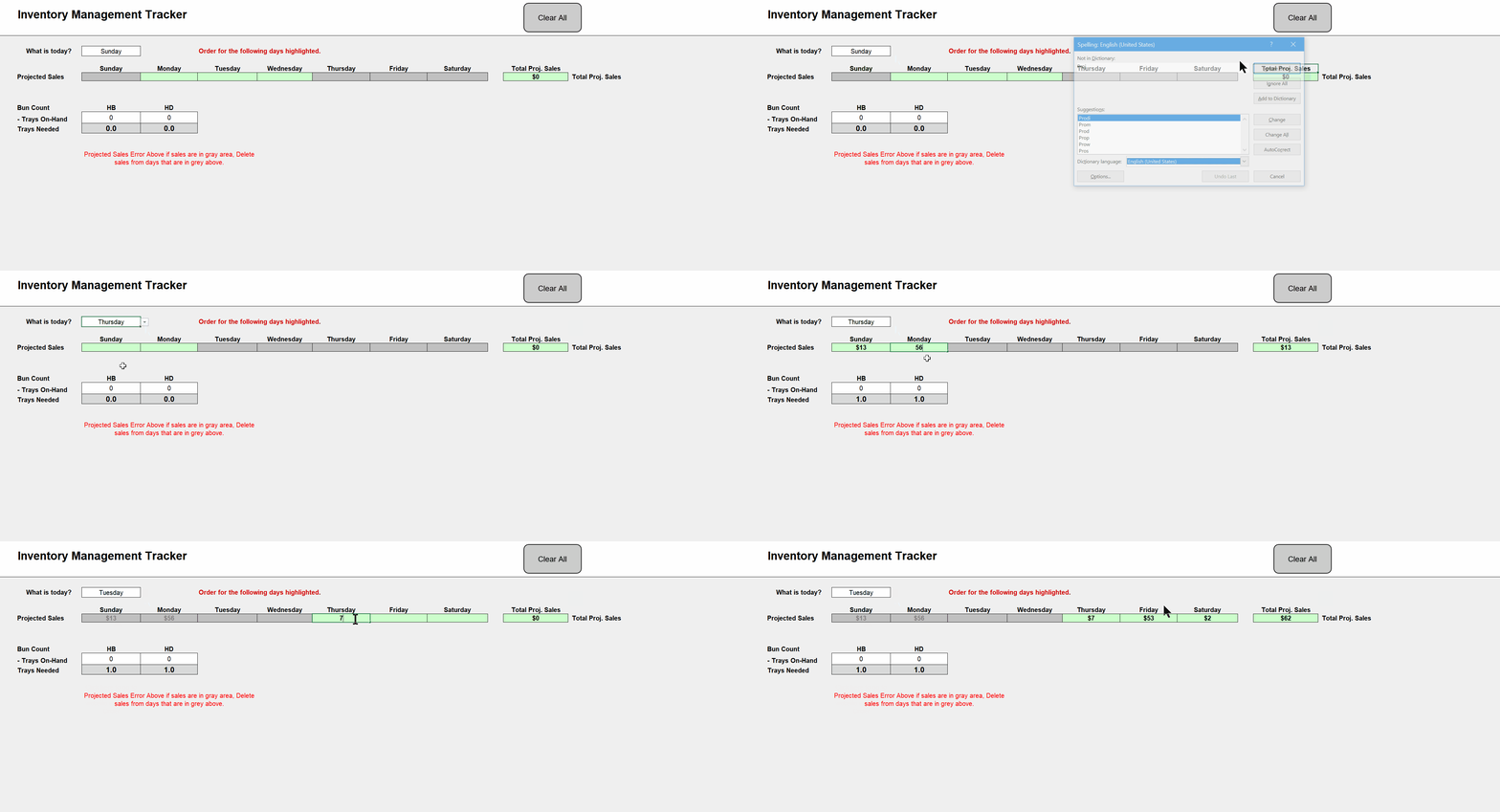
  • Inventory Management Tracker

    Inventory Management Tracker

    Overview: An inventory monitoring and optimization tool tailored for the food and beverages industry

    Industry: Food and beverages/hospitality

    Pain Points: Overstocking or understocking of key ingredients and baked goods leading to food waste, stockouts, and increased operational inefficiency

    Key Features: Real-time inventory tracking across multiple restaurant locations, predictive restocking alerts based on consumption patterns, centralized dashboard for inventory visibility, category-specific monitoring, integration with POS systems for automatic stock deduction, reporting tools for inventory audits and loss prevention

    Value Delivered: Minimized food waste, optimized stock levels, streamlined supply chain management

    Target Users: Restaurant managers, regional operations managers, inventory control specialists

    Results: Up to 25% reduction in food waste, 18% improvement in inventory/stock accuracy, faster inventory reconciliation processes, improved customer satisfaction through better product availability
  • Workforce Scheduling Audit Tool

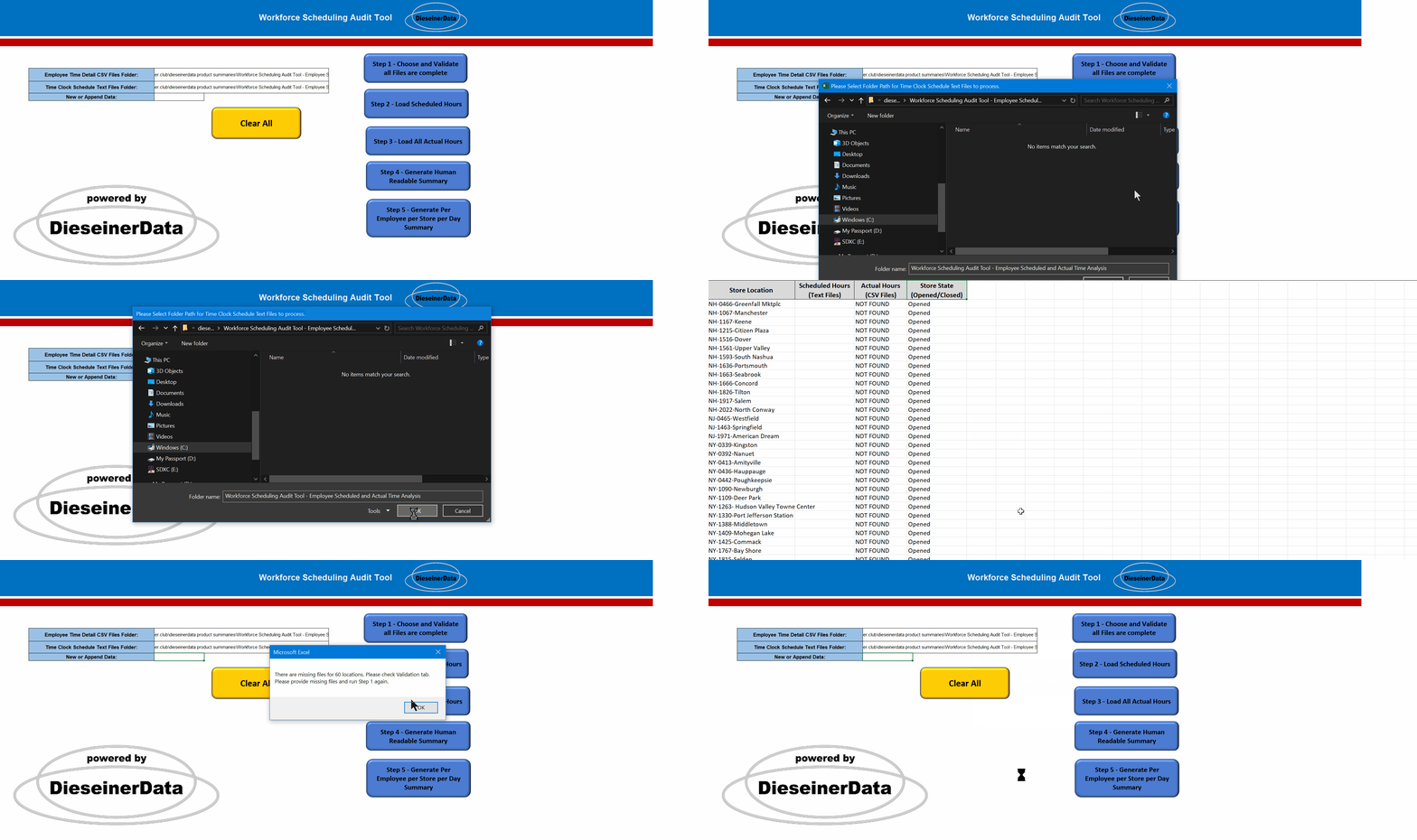
    Workforce Scheduling Audit Tool

    Overview: An auditing tool that consolidates input from multiple sources in order to analyze employee scheduling efficiency

    Industry: Food and beverages

    Pain Points: Disconnected data sources, inefficient labor scheduling, lack of insight into staffing patterns

    Key Features: Dashboard visualizations, cross-referencing of timeclock/POS/HR data 

    Value Delivered: Improved labor efficiency, reduced over/understaffing, data-backed scheduling decisions

    Target Users: Restaurant managers

    Results: Up to 20% better labor alignment, faster schedule creation times, reduced scheduling errors

  • Turning Construction Timesheets into Payroll


    How Dieseinerdata Builds Smarter Web Applications for Messy Data

    In the fast-paced, detail-driven world of construction, time is money—literally. Tracking worker hours accurately and converting that data into compliant, timely payroll is essential for financial health and employee satisfaction. But what happens when that data is messy, inconsistent, or pulled in from multiple sources like APIs, spreadsheets, and third-party timesheet software?

    At Dieseinerdata, we specialize in building custom web applications that not only handle complex data streams but also clean, standardize, and document that data every step of the way. In this post, we’ll walk you through how we build a web app to take in CSV timesheet data from construction APIs and turn it into ready-to-process payroll outputs.

    MORE
  • Why Businesses Are Embracing Data Analytics?

    Data analytics involves examining raw data to uncover trends, draw conclusions, and support business decisions. When done right, it can help companies:

    • Improve operational efficiency
    • Understand customer behavior
    • Forecast sales and revenue
    • Reduce waste and costs
    • Identify new opportunities
    • Outperform competitors

    Even if your company doesn’t yet have a full analytics team, you can still unlock these benefits by starting smart and scaling up.

    MORE
  • What Tools and Software will you use to Build our Construction Company’s Web Application for Automated Proposal Making?”

    Here is a full blog post exceeding 1,500 words, written for your data analytics company’s blog:


    Title: We Need to Build an Automated Proposal-Making Web Application for My Construction Company — What Tools and Software Will Your Data Analytics Company Use?

    In the construction industry, time is money—and nowhere is that more apparent than in the pre-sales and proposal phases of a project. Drafting proposals is one of the most time-consuming, repetitive, and error-prone tasks for many construction firms. Manually assembling cost estimates, scopes of work, timelines, and materials lists across dozens of potential jobs can drain valuable internal resources that could otherwise be focused on billable work.

    That’s where an automated proposal-making web application comes in. When done right, this kind of tool doesn’t just save time—it becomes a cornerstone of operational efficiency, consistency, and client satisfaction.

    If you’ve been thinking, “We need to build an automated proposal-making web app for our construction company”—you’re not alone. And if you’re wondering, “What tools and software will Dieseinerdata use to build it?”—you’re in the right place.

    As a data analytics and automation-focused company, Dieseinerdata approaches web app development not just from a software engineering perspective, but with the data-first mindset that ensures the tool is scalable, insightful, and built to grow with your business.

    In this article, we’ll walk you through the technologies and approaches we use to build automated proposal generators for construction clients. You’ll see what’s under the hood, what the user experience can look like, and how data-driven thinking makes all the difference.

    MORE
  • How Can My Company Get Started with Data Analytics?

    In today’s fast-paced digital economy, data is often referred to as the “new oil.” But unlike oil, which must be refined before it’s usable, data requires thoughtful strategy, tools, and expertise to yield insights that drive meaningful business decisions. That’s where a data analytics company like Dieseinerdata comes in.

    (more…)
  • Visualizations and Dashboards?

    In the ever-evolving world of data analytics, the terms data visualizations and dashboards are often used interchangeably, yet they represent distinct concepts with powerful intersections. Understanding where these two meet is essential for any organization aiming to make data-driven decisions efficiently, intuitively, and impactfully.

    (more…)
  • What Does a Data Analytics Company Mean When They Say “Web App”?

    In the modern business landscape, buzzwords like cloud, automation, machine learning, and web app are everywhere. While most are familiar with what a mobile app is, the term web app can feel a bit fuzzy—especially in the context of data analytics. What exactly does a data analytics company mean when they say they’ll build you a web app? Is it just a dashboard? Is it the same as a website? Is it something you install?

    (more…)
  • What Value Will Automated Reporting Bring My Company?

    In today’s data-driven business landscape, companies of all sizes are inundated with information—metrics, KPIs, trends, customer behaviors, and more. While access to data has never been easier, the ability to interpret, share, and act on that data efficiently remains a significant challenge for many organizations. That’s where automated reporting steps in.

    (more…)
  • Specific Data Analytics Use Cases in the Retail Industry

    1. Customer Segmentation and Personalization

    Modern retail is driven by personalization. Data analytics enables businesses to segment customers based on purchasing behavior, demographics, psychographics, and even web activity. This allows for:

    • Targeted email campaigns with personalized offers
    • Product recommendations tailored to individual preferences
    • Predictive models for customer lifetime value and churn risk

    Example:
    A cosmetics retailer used clustering algorithms to identify four core customer personas. They tailored product offerings and marketing campaigns to each persona, increasing their email click-through rate by 40% and upselling by 22%.

    More